

India and Taiwan 25 Years of Relationship
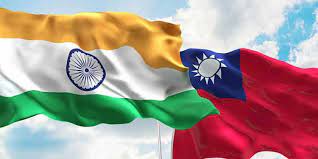
- India-Taiwan relations have been improving gradually.
“PSIR Answer Writing” course visit www.upschacks.com
- The bilateral relations between India and Taiwan have improved since the 1990s despite both nations not maintaining official diplomatic relations
- The two sides established representative offices in 1995 in New Delhi and Taipei respectively.
- India recognises only the People’s Republic of China (in mainland China) and not the Republic of China’s claims of being the legitimate government of Mainland China, Hong Kong, and Macau – a conflict that emerged after the Chinese Civil War (1945–49).
- Over the past decade, a potential point of convergence emerged in the two countries’ foreign policy outlook: India’s “Act East Policy,” which seeks to advance
Suez canal
- Low tide overnight has slowed efforts to dislodge a massive container ship that has choked traffic in both directions along the Suez Canal and created one of the worst shipping jams seen in years.
- The Suez Canal is a sea-level waterway in Egypt, connecting the Mediterranean Sea to the Red Sea through the Isthmus of Suez.
- It extends from the northern terminus of Port Said to the southern terminus of Port Tewfik at the city of Suez.
- The canal is owned and maintained by the Suez Canal Authority (SCA) of Egypt.
- The canal offers watercraft a more direct route between the North Atlantic and northern Indian oceans via the Mediterranean and Red seas, thus avoiding the South Atlantic and southern Indian oceans.
Suez Crisis
- The Israeli army struck first on October 29, 1956, with the British and French forces joining suit later.
- The original plan was to strike at once but transportation issues of the French and British troops had caused a delay.
- The joint offensive saw the Egyptian forces lose complete control of the canal area and it would seem that the canal would be lost, but Nasser rallied his country’s army and fought on.
- The delay in the offensive had given the Soviet Union, allies of the Egyptians, time to respond.
- The Soviet Union eager to gain influence in the middle east supplied arms and ammunition to the Egyptian army.
- Soviet leader Nikita Khruschev went as far as threatening to rain nuclear missiles on Western Europe should the Israeli-French-British force not withdraw in time
- The response of the United States warned that should the British, French and the Israelis not withdraw from the Suez Canal, his government would impose economic sanctions on all three.
- This worked and the British and French forces withdrew by December 1956 while the side of the canal towards the Sinai would be held by the Israelis until March 1957.
- The Suez Crisis marked the first use of a United Nations peacekeeping force. The United Nations Emergency Force (UNEF) was an armed group dispatched

You may also like

BRO to build First Steel Slag Road in Arunachal Pradesh
20 August, 2022
“Dahi-Handi” Recognised as an Official Sport of Maharashtra
20 August, 2022