

Pradhan Mantri Fasal Bima Yojana completes 5 years
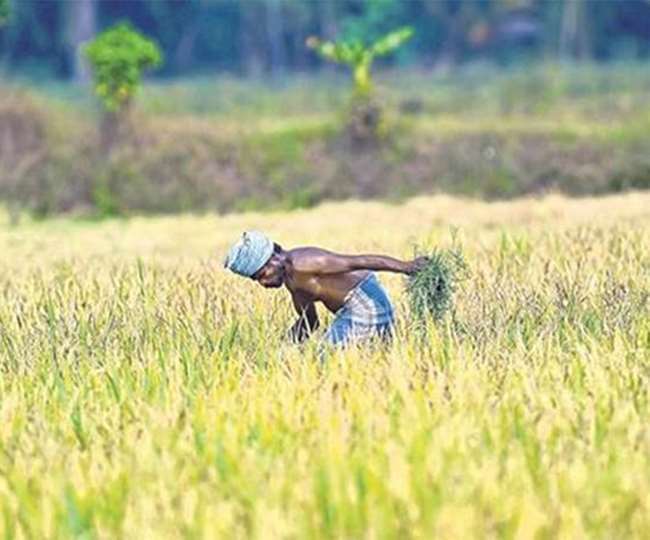
- The Centre has urged the farming community to take advantage of the Pradhan Mantri Fasal Bima Yojana (PMFBY), which has completed 5 years yesterday, in order to become “self-reliant farmers”.
- In a statement, the Union agriculture ministry said claims worth 90,000 crore rupees have so far been disbursed to farmers since the launch of the scheme on 13th January 2016.
- The Central Government’s flagship crop insurance scheme – the Pradhan Mantri Fasal Bima Yojana (PMFBY) has successfully completed 5 years of its operation.
- The government took a historic step towards strengthening risk coverage of crops for farmers and approved the scheme on 13th January, 2016.
- The scheme was conceived as a milestone initiative to provide a comprehensive risk solution at the lowest uniform premium across the country for farmers.
- In the scheme, premium cost over and above the farmer share is equally subsidized by the Centre and States.
- Ministry of Agriculture has said that the average sum insured per hectare has increased from 15 thousnad 100 during the pre-PMFBY Schemes to 40 thousand 700 under Pradhan Mantri Fasal Bima Yojana
- With an aim to constantly bring about improvements, the Pradhan Mantri Fasal Bima Yojana was made voluntary for all farmers, post its revamp in February 2020.
Best “PSIR Answer Writing” course visit www.upschacks.com
- Besides, the States have also been provided flexibility to rationalize the sum insured so that adequate benefit can be availed by the farmers.
- The Scheme covers over 5.5 crore farmers’ applications year on year and till date, claims worth 90 thousand crore rupees have already been paid out under the Scheme.
- Aadhar seeding has helped in speedy claim settlement directly into the farmer accounts.
- Even during COVID-19 lock down period nearly 70 lakh farmers benefitted and claims worth over 8 thousand 741 crore rupees were transferred to the beneficiaries.
- The government has urged the farmers to take advantage of the scheme by associating themselves to become self-sufficient in times of crisis and support the creation of an Aatmanirbhar Kisan.

You may also like

BRO to build First Steel Slag Road in Arunachal Pradesh
20 August, 2022
“Dahi-Handi” Recognised as an Official Sport of Maharashtra
20 August, 2022