

Komodo Dragon
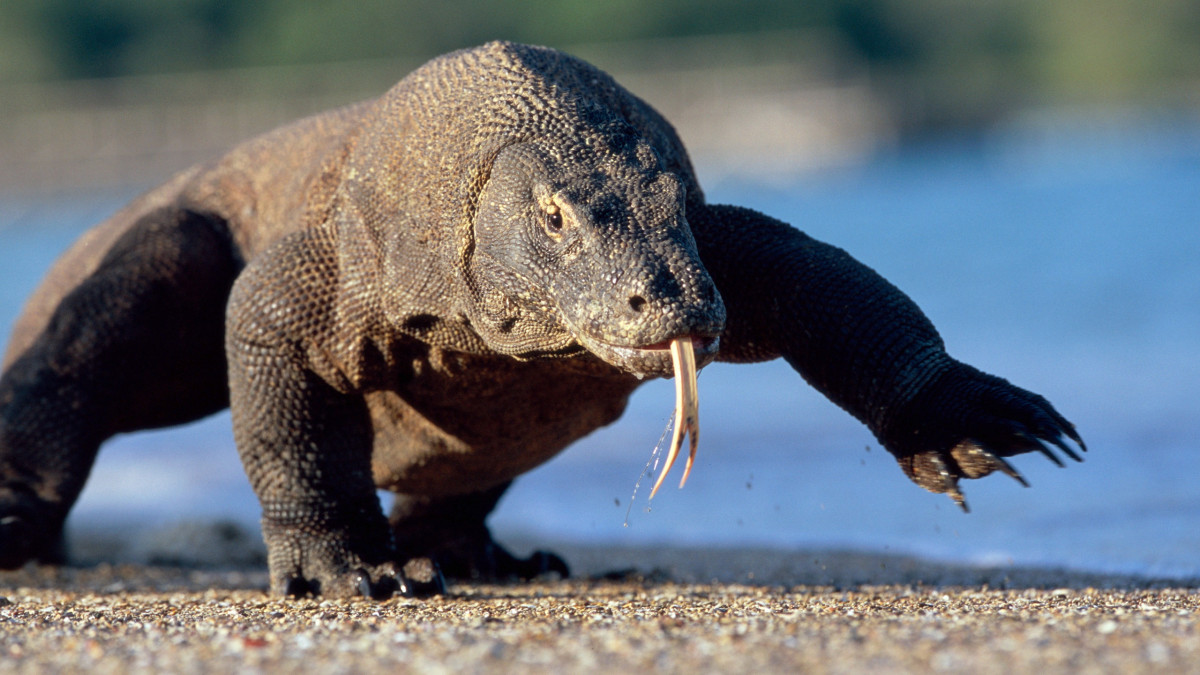
- A recent study finds that the Komodo dragon, the world’s largest lizard, could become extinct in the next few decades due to climate change
- The study conducted by the University of Adelaide and Deakin University, both in Australia states that the Komodo Dragon could become extinct in the next few decades due to climate change unless measures are taken to change the status quo
- The study used models to predict that the dragon could become extinct on three of the five island habitats where it is currently found
- According to it, climate change was likely to cause a sharp decline in the availability of habitat for Komodo dragons, reducing their populations, according to the authors of the study.
- The Komodo dragon, also known as the Komodo monitor, is a species of lizard found in the Indonesian islands of Komodo, Rinca, Flores, and Gili Motang.
- Also known as the Komodo monitor, is a species of lizard found in the Indonesian islands of Komodo, Rinca, Flores, and Gili Motang.
- A member of the monitor lizard family Varanidae, it is the largest extant species of lizard, growing to a maximum length of 3 metres (10 ft) in rare cases and weighing up to approximately 70 kilograms (150 lb).
- Scientific Name: Varanus komodoensis
Best “PSIR Answer Writing” course visit www.upschacks.com
- Type: Reptiles
- Diet: Carnivore
- Average LifeSpan in the Wild: Up to 30 years
- They have long, flat heads with rounded snouts, scaly skin, bowed legs, and huge, muscular tails.
- Komodo dragons have thrived in the harsh climate of Indonesia’s Lesser Sunda Islands for millions of years.
- They prefer the islands’ tropical forests but can be found across the islands.
- Though these athletic reptiles can walk up to seven miles per day, they prefer to stay close to home rarely venturing far from the valleys in which they hatched.
- Unique reproduction (a sexual):
- When there aren’t any males around, female Komodo dragons have other means of reproducing: As they have both male and female sex chromosomes, female dragons can reproduce asexually in a process called parthenogenesis
- IUCN status: Vulnerable

You may also like


BRO to build First Steel Slag Road in Arunachal Pradesh
20 August, 2022
“Dahi-Handi” Recognised as an Official Sport of Maharashtra
20 August, 2022