

Rooftop Solar Scheme
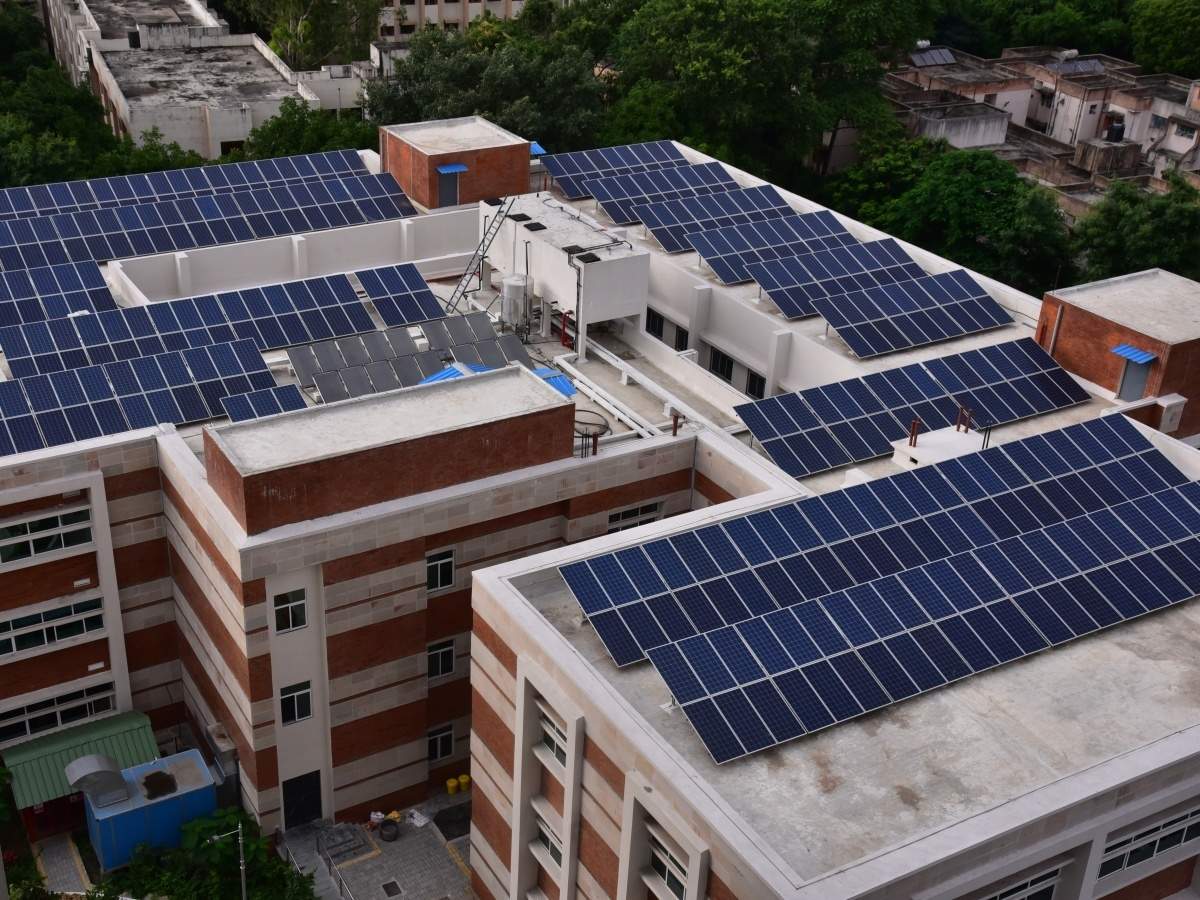
- The Government of India has taken an ambitious target of 100,000 MW of solar power by 2022 out of which 40,000 MW is to be achieved through Rooftop Solar (RTS) power plants as per the clean climate commitments.
“PSIR Answer Writing” course visit www.upschacks.com
- To generate solar power by installing solar panels on the roof of the houses, Ministry of New and Renewable Energy is implementing this scheme Objectives
- Promote the grid connected SPV rooftop and small SPV power generating plant s among the residential, community, institutional, industrial and commercial establishments
- Mitigate the dependence on fossil fuel-based electricity generation and encourage environment friendly Solar electricity generation
- Create enabling environment for investment in solar energy sector by private sector, state government and the individuals
- Create enabling environment for supply of solar power from rooftop and small plants to the grid
- Encourage innovation in addressing market needs and promoting sustainable business models and ensure employment opportunities
- Provide support to channel partners and potential beneficiaries, within the framework of boundary conditions and in a flexible demand driven mode
- Create a paradigm shift needed for commoditization of grid connected SPV rooftop applications
- Encourage replacement of diesel, wherever possible
- Main PV Rooftop programme Actors
- State Nodal Agencies (SNAs)
- Distribution Company (DISCOM)
- Chief Electrical Inspector to Government
- Channel Partners
- Solar Energy Corporation of India (SECI)
- Financial Institutions/Banks
- In a solar rooftop system, the solar panels are installed in the roof of any residential, commercial, institutional and industrial buildings.
- This can be of two types: (i) Solar Rooftop System with storage facility using battery, and (ii) Grid Connected Solar Rooftop System.
- In grid connected rooftop or small SPV system, the DC power generated from SPV panel is converted to AC power using power conditioning unit and is fed to the grid either of 33 kV/11 kV three phase lines or of 440/220 Volt three/single phase line depending on the capacity of the system installed at institution/commercial establishment or residential complex and the regulatory framework specified for respective States.
- The concept of rooftop solar is based on the scale of the PV(photovoltaic) plant rather than the fact whether it is situated on a roof/terrace or not. Hence, the definition of RTS also includes small solar plants on the ground.

You may also like


BRO to build First Steel Slag Road in Arunachal Pradesh
20 August, 2022
“Dahi-Handi” Recognised as an Official Sport of Maharashtra
20 August, 2022